Photo: Kenneth C. Zirkel / Wikimedia Commons, CC BY-SA 4.0
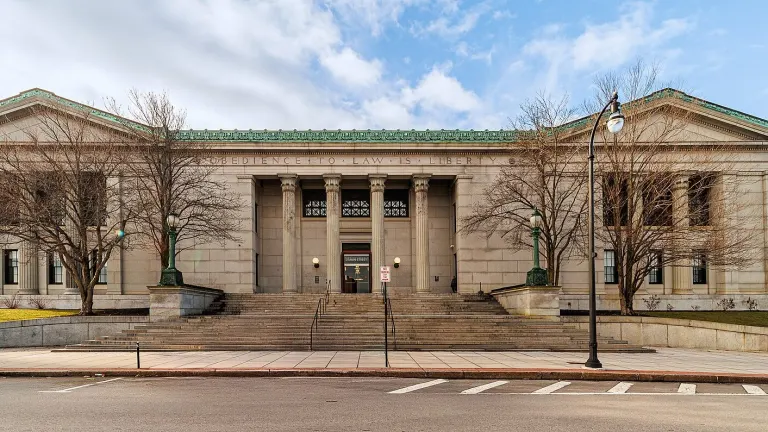
Few buildings in Worcester have been a wrestling arena, a roller rink, a concert hall and a wedding venue. Mechanics Hall, at 321 Main St., has been all of them since it opened in 1857, and in the early 1970s it came close to being torn down.
The hall is owned and run by the Worcester County Mechanics Association, a nonprofit formed in late 1841 by a group of local men that included inventor and wire manufacturer Ichabod Washburn, according to the hall’s published history. By February 1842 the association had 115 members and held its first event, a public debate.
Its story is a useful lens on the city itself: an institution built by and for the craftsmen of an industrial town, then rescued by that town when the industry faded.
Built for working people
Worcester grew quickly after the railroad arrived in the 1830s, and the association set out to give mechanics, craftsmen and tradesmen the technical training the new economy demanded. It assembled a lending library of technical books and offered classes in mechanical drawing, pipefitting and blueprint reading. In 1848 it organized its first Mechanics Fair, an exhibition of machinery, inventions and manufactured goods.
By 1854 the association had outgrown rented rooms. Under Washburn’s guidance it hired architect Elbridge Boyden. Ground was broken in July 1855, the cornerstone was laid that September with a parade led by the Boston Brass Band, and the hall was dedicated on March 19, 1857.
The organization changed with the city. The hall’s timeline records the first African American member admitted in 1868, the Hook organ installed in 1864, members who were not mechanics accepted from 1899 and women admitted as members in 1953.
Wrestling, roller skates and a fire order
By the middle of the 20th century, newer venues drew the big cultural bookings. The association rented the Great Hall for professional wrestling, roller skating, basketball, dance lessons and 4-H meetings. It put the building on the market in 1948 and found no buyer; a 1952 sale fell through.
Years of hard use took a toll. In 1972 the Fire Department forced a shutdown, and the association faced a choice between demolition and restoration. When word spread that the hall might come down, the community raised $5 million to restore it, the hall’s history says. It was listed on the National Register of Historic Places in 1973 and rededicated in 1977.
A hall that keeps adding faces
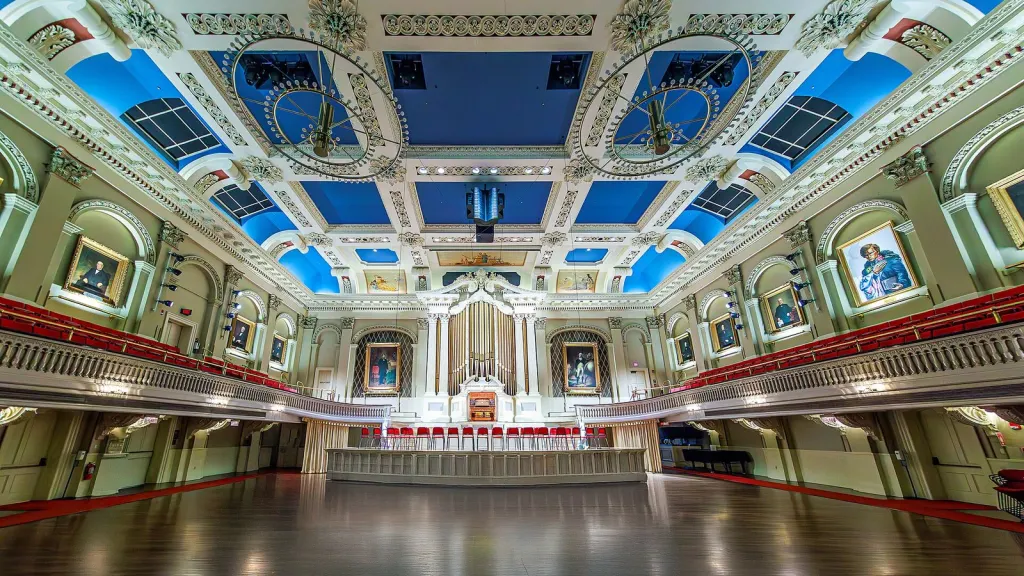
The restored building, which the hall says architectural historians have judged the nation’s finest pre-Civil War concert hall, has kept growing. The Waldo Lobby and Boyden Salon addition followed in 1978, the Hook organ was restored in 1982, and the Brown Bag Concert Series began in 1983. Portraits of women were added to the Great Hall in 1999, and in 2024 the hall installed portraits of Frederick Douglass, Sojourner Truth, and William and Martha (Tulip) Brown alongside the 19th-century figures on its walls.
Today the nonprofit hosts concerts, recording sessions, weddings, galas and business events. Its organ concert series, begun in 2009, and its lunchtime concerts remain the easiest way for residents to see the Great Hall from the inside. Schedules and tickets are on the hall’s website, or by calling the box office at 508-752-0888.
For more profiles of the places and people that shape the city, see City Portraits, and for another restored Main Street landmark, read about the Major Taylor Museum at Courthouse Lofts.
Another downtown landmark tells the story of Worcester’s world champion cyclist; read our portrait of the Major Taylor Museum.