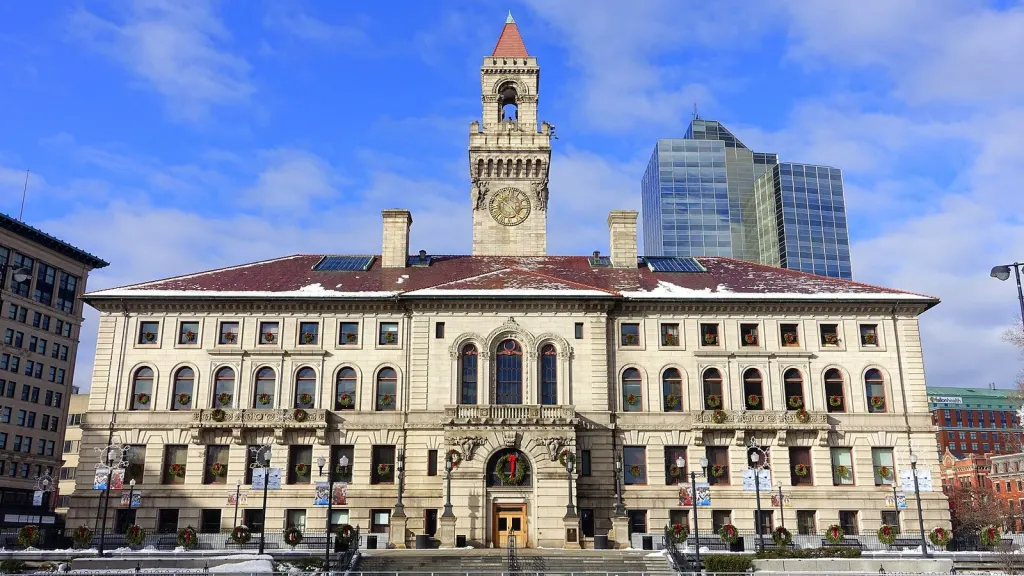
Photo: Daderot / Wikimedia Commons, CC0
Worcester homeowners will pay a residential property tax rate of $12.87 per $1,000 of assessed value in fiscal 2027, the lowest rate the City Council could legally choose, after a 6-5 vote on Tuesday, Nov. 24.
The commercial, industrial and personal property rate was set at $28.35. Under the administration’s tax classification figures, as reported by The Worcester Guardian, the average single-family tax bill rises $62, or 1.14%, to $5,508. The average commercial bill rises $3,522, or 9.37%, to $41,125. Both figures leave out the Community Preservation Act surcharge.
For a household watching its monthly budget, that works out to about $5 more a month on the average single-family home. For businesses, the increase is far steeper, which is why the vote split the council almost down the middle.
How the council divided
Councilors Morris Bergman, Robert Bilotta, John Fresolo, Khrystian King, Luis Ojeda and Gary Rosen voted for the lowest residential rate. Councilors Tony Economou, Satya Mitra, Jose Rivera, Kate Toomey and Mayor Joseph Petty voted against it, according to the Guardian’s account of the meeting.
Toomey had backed a middle option, a residential rate of $13.28 and a commercial rate of $26.85. Supporters of the lowest residential rate pointed to housing costs and fixed-income homeowners. Opponents argued that a heavier load on businesses could shrink the commercial tax base over time and push more of the levy back onto homeowners in later years.
Worcester uses a split rate, which lets the council shift part of the tax burden from residential property to commercial, industrial and personal property. The total assessed value of taxable property rose to about $27.3 billion this year, up 7.8% from the year before, according to the administration’s tax package.
Where the extra $3.5 million goes
In a separate 10-1 vote, the council put about $3.5 million in new-growth revenue, money that came in above what the budget assumed, into the New High School Construction Stabilization Fund for the rebuilding of Burncoat Middle and High School. Bergman cast the only no vote.
City Manager Eric Batista’s package had laid out the choice. Leaving the $3,502,413 unspent would have meant a levy of about $439.6 million and a small amount of tax relief. Sending it to the school fund produces a levy of about $443.1 million. At the Nov. 17 hearing, the city’s chief financial officer said each $1 million change works out to roughly $13 a year for the average single-family home at the lowest residential rate.
The Burncoat project is the largest school construction job on the city’s horizon, and money set aside now could reduce how much the city has to borrow later. A consultant’s report on school boundaries also cites the future of Burncoat as a reason to hold off on middle and high school changes, as we reported in our coverage of the realignment study.
Public comment time doubles
The same meeting brought a change to how residents are heard. The council approved a rule change that raises the total time for public participation from 30 to 60 minutes, while a proposal to move regular meetings from 6:30 to 5:30 p.m. was held for a later meeting.
Homeowners who think their assessed value is wrong can ask the city’s Assessing Division about the abatement process once the new bills arrive. For more on household costs, see our Finance section, and for the council’s other big item this month, read our report on the public camping ordinance.